
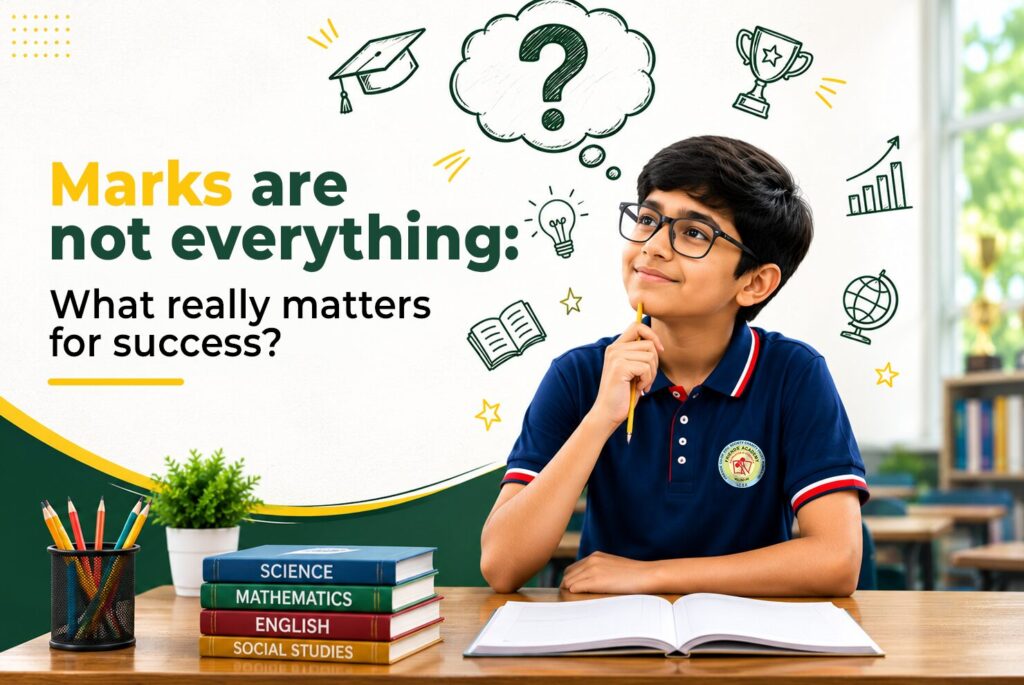
For years, marks have been considered one of the biggest measures of success in a child’s academic journey. Report cards, rankings, percentages, and grades often become the centre of discussions at home and school. While academics are important, they are only one part of a child’s overall growth.
Many students who score average marks go on to become successful entrepreneurs, artists, leaders, innovators, athletes, and professionals. On the other hand, many high scorers struggle with confidence, communication, emotional management, or practical skills later in life.
Do Marks Really Matter?
Yes, marks do matter because they reflect a child’s academic understanding and effort. However, they are not the only measure of success. Skills like confidence, communication, creativity, emotional intelligence, and problem-solving are equally important in helping children succeed in school and later in life.
We at Friends’ Academy believe the same, and hence focus on a child’s overall growth, personality, confidence, emotional intelligence, creativity, and ability to handle real-life situations, as they play an equally important role in shaping their future. As parents and educators, it is important to understand what truly contributes to long-term success and how children can be guided beyond academic pressure.
Why Marks Alone Cannot Define a Child?
Every child is different. Some children excel in academics, while others perform exceptionally well in creativity, sports, leadership, technology, performing arts, communication, or problem-solving. When success is measured only through marks, children may begin to fear failure, lose confidence, feel stressed about learning, and study only for scores instead of understanding concepts.
Education should not only focus on memorising answers. It should prepare children for life, decision-making, communication, teamwork, and future challenges. A report card should not only show academic performance but also measure creativity, kindness, leadership, curiosity, discipline, confidence, and emotional strength. These qualities are equally important for future success.
Why Is Confidence More Important Than Perfection?
A confident child is more likely to participate in activities, ask questions, express opinions, explore opportunities, and overcome failures positively.
Children who constantly fear marks often hesitate to take risks or try new things. They may become anxious about making mistakes. Confidence allows children to believe in themselves even when results are not perfect. This is why many schools today focus on personality development, public speaking, performing arts, robotics, and extracurricular activities alongside academics.
At the end of the day, children who believe in themselves are more prepared to face real-world situations confidently.
Why Are Communication Skills Important for Children?
Strong communication skills are essential in every career and profession today. A child who can express ideas clearly, speak confidently, and interact effectively often performs better in interviews, presentations, leadership roles, and social situations.
However, communication skills cannot be developed through marks alone. Communication grows through activities such as debates, theatre, group discussions, storytelling, presentations, and everyday classroom interactions.
Emotional Intelligence Is Equally Important
Success is not only about intelligence. It is also about how children manage emotions, stress, pressure, failures, and relationships. Children face academic competition, social pressure, screen distractions, comparison, and fear of failure. Children also need to learn how to stay calm under pressure, understand their emotions, build healthy relationships and handle setbacks positively.
Parents can support this by having open conversations and offering emotional encouragement.
Creativity and Problem-Solving Matter
Today’s world values children who can think creatively and solve problems independently. Modern careers and industries value innovation, practical thinking, leadership, adaptability, and critical thinking. Children need to develop these skills when they are encouraged to participate in activities, explore hobbies, ask questions, experiment, and learn practical things.
Application-based learning helps children understand concepts instead of studying them only for examinations. This is one of the reasons why most ICSE schools focus on conceptual understanding and practical exposure.
Discipline and Consistency Build Long-Term Success
Success is not built overnight through one examination result. It is built through consistency, discipline, patience, effort, and continuous learning. Children should be taught that improvement matters, mistakes are normal, and growth takes time. Parents should appreciate efforts, hard work, and progress rather than focusing only on final scores.
A child who learns discipline and consistency becomes prepared for future responsibilities and career growth.
Participation in Activities Helps Personality Development
Extracurricular activities play an important role in building confidence, leadership, teamwork, communication, and social skills. Sports, dance, robotics, music, public speaking, and cultural activities make it easy for children to discover their strengths beyond academics. These activities reduce stress and improve concentration levels, making students more expressive, confident, and emotionally balanced. These experiences help children discover their strengths and interests beyond academics.
The Role of Parents in Reducing Academic Pressure
Many children experience stress because they feel pressured to constantly score high marks. While expectations are natural, excessive pressure can negatively affect confidence, concentration, motivation, and mental well-being.
Parents can reduce academic pressure by appreciating efforts, encouraging learning instead of memorising, avoiding comparisons, celebrating small improvements, and understanding their interests and strengths.
Children perform better when they are supported rather than judged.
What Schools Should Focus On?
A good school focuses not only on academics but also on overall child development. At Friends’ Academy, we encourage students to participate in interactive learning, extracurricular activities, personality development, communication-building, and practical learning, helping them grow into confident and future-ready individuals.
As one of the leading ICSE schools in Mulund West, Friends’ Academy believes that education goes beyond textbooks and examinations. Along with academics, students are encouraged to participate in activities that build self-belief, creativity, communication skills, leadership qualities, and overall personality development.
The focus is on helping every child discover their strengths, develop practical skills, and grow into capable individuals prepared for life beyond classrooms.
Marks are important, but they are only one part of a child’s journey. True success is built through interpersonal skills, communication, emotional intelligence, discipline, creativity, and the ability to face challenges positively.
Every child has unique strengths and talents that cannot always be measured through examination scores. As parents and educators, the goal should not only be to help children score better marks, but also to help them become confident, responsible, skilled, and emotionally strong individuals ready for the future.
Because in the end, success in life is not only about marks; it is about the person a child grows into