

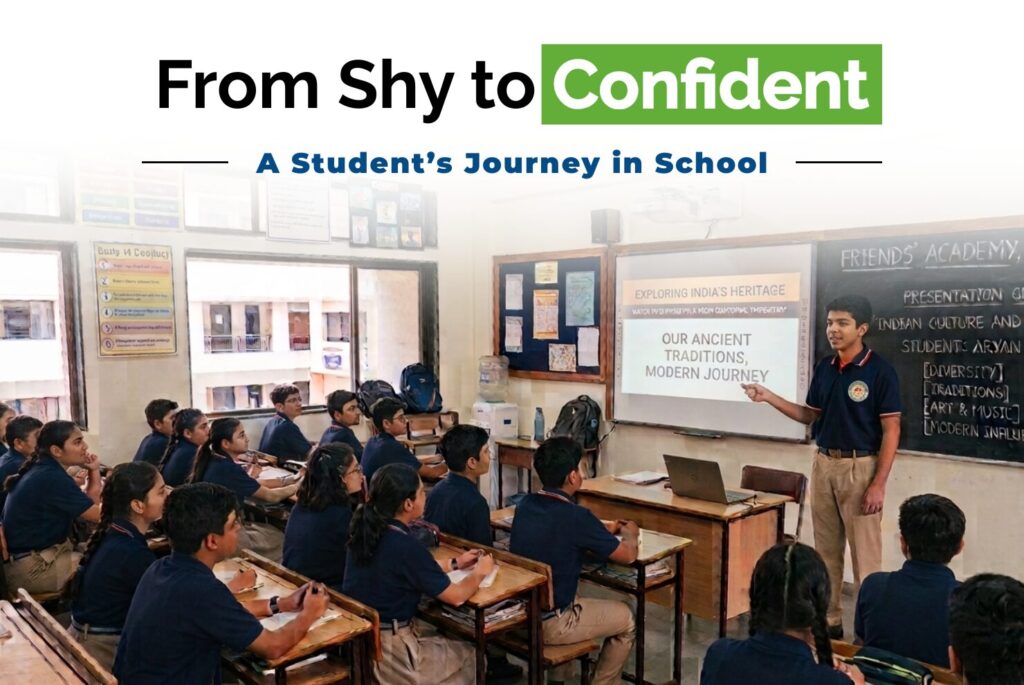
Every child enters school with a unique personality. While some students naturally participate in conversations, answer questions confidently, and make friends easily, others may take time to open up. Being shy is not a weakness; it is simply a part of a child’s personality. However, confidence is a skill that can be developed with the right environment, encouragement, and opportunities.
For many parents, one common concern is watching their child hesitate to speak, avoid participation in activities, or struggle to express themselves. The good news is that schools play a significant role in helping students gradually transform from shy learners into confident individuals.
Understanding Shyness in Children
Shyness is common among children, especially when they enter a new environment.
A shy child may:
- Avoid speaking in front of groups
- Feel nervous when meeting new people
- Hesitate to answer questions in class
- Prefer observing rather than participating
- Take longer to build friendships
While these behaviours are natural, it is important to ensure that shyness does not limit a child’s growth, learning, or opportunities. Confidence develops when children are encouraged to step outside their comfort zones at their own pace.
The First Step: Creating a Safe Learning Environment
A child can only become confident when they feel safe, accepted, and valued. At Friends’ Academy, we focus on supportive learning environments that help students feel comfortable expressing their thoughts without fear of judgement. Teachers play an important role in encouraging participation, appreciating efforts, and creating opportunities for every child to contribute. When students know that mistakes are a part of learning, they become more willing to speak up and try new things.
This is why modern education focuses not only on academics but also on emotional well-being and personality development. At our school in Mulund, we have different programmes that allow teachers and parents to communicate with each other and get to know the child well.
Classroom Participation Builds Confidence
Confidence often begins with small moments. A student who once hesitated to answer a question may eventually volunteer responses. A child who was nervous about reading aloud may become comfortable presenting in front of the class.
Regular classroom participation helps students:
- Develop communication skills
- Improve critical thinking
- Express ideas confidently
- Build self-belief
Teachers who encourage interaction and discussions help students become active learners rather than passive listeners.
The Power of Extracurricular Activities
One of the most effective ways to build confidence is through extracurricular activities.
Activities such as:
- Public speaking
- Drama and theatre
- Dance and music
- Sports
- Art competitions
- Group projects
- Cultural events
provide students with opportunities to explore their strengths and showcase their talents.
Often, a child who appears quiet in the classroom discovers confidence on a stage, sports field, or during a creative activity. These experiences teach students that confidence grows through participation, not perfection.
Learning Through Teamwork
Group activities help children interact with different personalities and develop social confidence.
When students work together on projects, competitions, or classroom activities, they learn:
- Communication
- Leadership
- Collaboration
- Problem-solving
- Responsibility
Teamwork helps shy children gradually become more comfortable sharing ideas and contributing in group settings. Over time, these experiences make social interactions easier and more natural.
Celebrating Small Achievements
Confidence is built one achievement at a time. For some students, speaking one sentence during assembly may be a major achievement. For others, participating in a competition or leading a group discussion may be a significant milestone.
Recognising and celebrating these small victories helps students:
- Feel valued
- Build self-esteem
- Stay motivated
- Develop a positive mindset
The goal is not to compare students with others but to help them grow from where they started.
Confidence Beyond Academics
While academic performance is important, confidence impacts every area of a child’s life.
Confident students are more likely to:
- Participate in class
- Build meaningful friendships
- Handle challenges positively
- Communicate effectively
- Explore opportunities
- Develop leadership qualities
These skills continue to benefit them throughout higher education, careers, and personal life. This is why confidence-building has become an essential part of modern education.
How Schools Shape Confident Individuals?
Schools that focus on holistic development understand that education goes beyond textbooks.
Opportunities such as:
- Public speaking sessions
- Performing arts
- Sports activities
- Leadership roles
- Interactive learning
- Student presentations
- Personality development programmes
allow students to discover their strengths and gradually overcome hesitation.
Every activity becomes a stepping stone towards greater confidence.
Friends’ Academy: Nurturing Confidence Alongside Learning
At Friends’ Academy, we believe that every child has unique potential waiting to be discovered. Through interactive learning, extracurricular activities, public speaking opportunities, performing arts, sports, and student engagement programmes, we encourage children to express themselves confidently and develop skills beyond academics.
Our focus is not only on academic excellence but also on helping students become confident, responsible, and future-ready individuals.
The journey from shy to confident does not happen overnight. It is built through encouragement, participation, positive experiences, and consistent support from parents and teachers. Every child deserves an environment where they feel valued, heard, and empowered to grow.
With the right guidance and opportunities, even the quietest student can develop the confidence to speak up, participate, lead, and succeed.
Because confidence is not about being the loudest person in the room—it is about believing in yourself, your abilities, and your potential to achieve great things.