

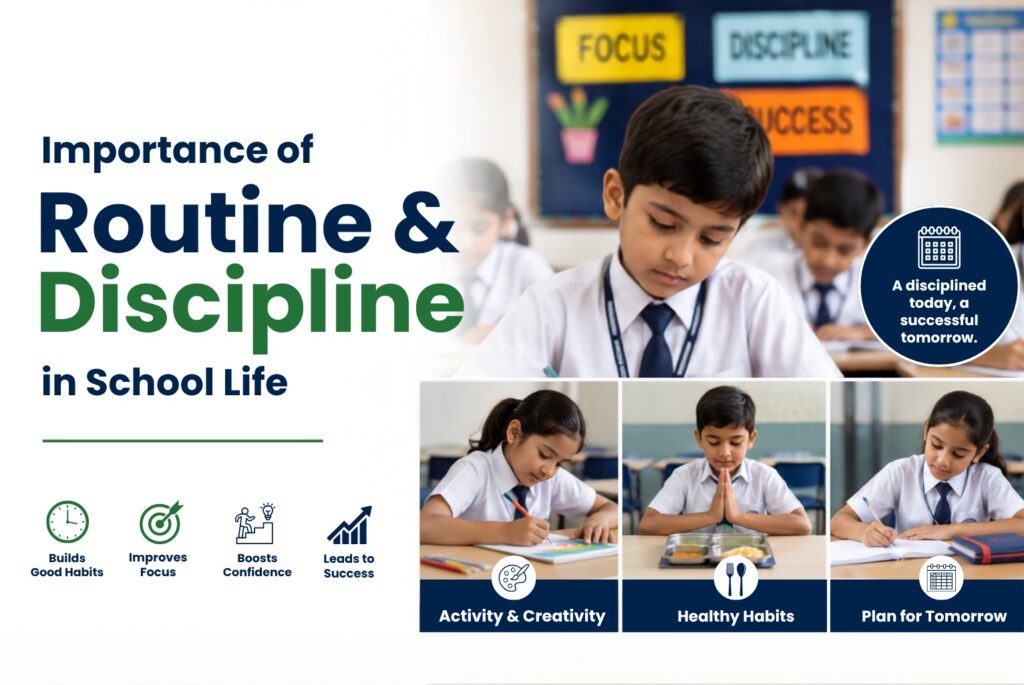
Routine and discipline are the paths taught during childhood. While intelligence, talent, and academic abilities certainly contribute to a child’s growth, routine and discipline often form the foundation that supports long-term success. Children today are surrounded by distractions. Mobile phones, social media, video games, and endless entertainment options can easily divert their attention from studies and personal development. This is why establishing a healthy routine and cultivating discipline from an early age becomes essential.
Routine and discipline are not about restricting children. Instead, they help create structure, responsibility, and habits that benefit students throughout their academic journey and beyond.
Why Routine Matters in a Student’s Life?
A routine provides structure and predictability. When children know what is expected of them and when they need to complete certain tasks, they are more likely to stay organised and focused.
A well-planned daily routine helps students:
- Manage their time effectively
- Balance academics and extracurricular activities
- Reduce stress and last-minute pressure
- Improve concentration and productivity
- Develop responsibility and accountability
Children who follow a routine often find it easier to complete assignments, prepare for examinations, and participate in activities without feeling overwhelmed. Routines are not built within a day; they take time. Hence, introduce small habits to build them gradually.
Discipline: A Life Skill Beyond Academics
Discipline is often misunderstood as strict rules or punishment. In reality, discipline is about self-control, responsibility, and making the right choices consistently.
A disciplined student learns to:
- Complete tasks on time
- Stay committed to goals
- Respect teachers, peers, and school rules
- Handle responsibilities independently
- Remain focused despite distractions
These qualities not only improve academic performance but also help children succeed in their personal and professional lives later on.
How Routine Improves Academic Performance
One of the biggest benefits of maintaining a routine is improved academic performance.
Students who have dedicated study hours are more likely to:
- Retain information better
- Complete homework regularly
- Revise concepts effectively
- Avoid last-minute exam stress
- Develop stronger learning habits
Consistent study schedules help children understand concepts gradually instead of relying on rushed preparation before examinations.
This is particularly beneficial in ICSE schools, where conceptual understanding and application-based learning play a significant role.
Building Better Time Management Skills
Time management is a skill that every student needs. Children who learn to manage their time effectively can balance:
- Studies
- Sports
- Hobbies
- Family time
- Social activities
Without a routine, students often procrastinate and struggle to complete tasks on time. A structured schedule teaches them how to prioritise responsibilities and use their time wisely. These habits continue to benefit students throughout higher education and future careers.
Routine Reduces Stress and Anxiety
Many students experience stress because they feel overwhelmed by unfinished assignments, upcoming examinations, and multiple responsibilities. Having a proper routine means breaking larger tasks into small ones. This reduces pressure and creates a sense of control. When children know they have enough time to study, revise, play, and relax, they feel more confident and less anxious about their responsibilities.
Discipline Helps Students Handle Challenges
Every student faces challenges at some point. Whether it is a difficult subject, a poor test result, or a new responsibility, discipline helps children remain focused and resilient.
Instead of giving up, disciplined students are more likely to:
- Learn from mistakes
- Continue working towards their goals
- Stay motivated during setbacks
- Develop a positive attitude towards learning
Building a mindset in the long term is crucial.
The Role of Parents in Building Routine and Discipline
At Friends’ Academy, we recently conducted an orientation programme for parents. We conducted this orientation programme to ensure parents are well aware of the challenges, syllabus, and many other aspects of their child’s academic journey. Another reason behind introducing this programme is that it allows parents to understand how to effectively plan their child’s schedule.
Parents play an important role in helping children develop healthy habits, and this can be done only if they are aware of the habits they should encourage, such as:
- Setting consistent wake-up and sleep schedules
- Creating dedicated study hours
- Encouraging responsibility for homework and assignments
- Limiting unnecessary screen time
- Promoting healthy eating and physical activity
- Leading by example through disciplined habits
Children often learn more from what they observe than from what they are told.
How Does Friends’ Academy Encourage Routine and Discipline?
Being an ICSE School in Mulund, we play a significant role in developing discipline and responsibility among students. Regular schedules, classroom expectations, assignments, activities, and participation opportunities teach children the importance of consistency and accountability.
A good school focuses on:
- Structured learning
- Time management
- Personal responsibility
- Respect for rules and values
- Balanced academic and extracurricular development
These experiences help students develop habits that remain valuable throughout their lives.
Routine and discipline are among the most valuable gifts we can give children. They create a strong foundation for academic success, emotional well-being, personal development, and future achievements.
While marks and examinations are important, the habits students develop through routine and discipline often have a much greater impact on their long-term success.
Want to know more about the other things that make Friends’ Academy one of the trusted schools in Mulund? Contact us or visit our campus to learn more.
Frequently Asked Questions
How does routine help children perform better in school?
A consistent routine helps children know what to expect each day, manage their time and stay focused on important tasks. Regular sleep, study, meals and play also help children build habits that support better concentration and learning.
How can parents create a good daily routine for school-going children?
Parents can create a routine by setting consistent timings for waking up, meals, schoolwork, play, screen time and bedtime. Keeping the routine simple and allowing some flexibility can help children follow it comfortably and independently.
How can I improve my child’s discipline and study habits?
Start with small, consistent expectations such as completing homework on time, keeping school materials organised and following a regular study schedule. Encouraging effort, setting achievable goals and giving children responsibility for their tasks can gradually build discipline and better study habits.
How does a school help children develop discipline and responsibility?
Schools help children develop discipline through regular schedules, classroom routines, rules and age-appropriate responsibilities. Activities such as group projects, assignments, leadership opportunities and participation in school events also encourage students to manage tasks, work with others and take ownership of their actions.