

Table of Contents When Should You Start Applying for School Admission in Mulund? The Real First Step: Shortlisting Schools What Should You Prepare Before Applying? So, Should You Apply Today or Tomorrow? How to Apply for School Admission at Friends’ Academy? Don’t Let “We’ll Apply Later” Become the Admission Plan Frequently Asked Questions For parents planning their child’s school admission in Mulund for the 2027–28 academic year, one question often comes first: When should we start applying? Starting too early may feel unnecessary, while waiting too long can make the process stressful, especially if you have a specific school, board or grade in mind. The right approach is not to wait for one fixed admission date. Instead, parents should start researching early, shortlist schools, check eligibility and application dates, and apply once the school opens admissions for the required academic year. If you are planning for 2027–28, now is the best time to start preparing rather than leaving everything until the last minute. When Should You Start Applying for School Admission in Mulund? If you are planning school admission in Mulund for the 2027–28 academic year, it is a good idea to start researching and shortlisting schools well in advance. There is no single admission date followed by every school in Mulund, so parents should check the official admission schedule, eligibility criteria & application process of each school. For some schools, admissions may begin around August–September 2026. For example, Friends’ Academy has opened admissions for the 2027–28 academic year, giving parents an opportunity to begin the application process during this period. A practical approach for parents is to: Start researching schools early and identify schools and boards that suit your child. Shortlist suitable schools based on curriculum, location, learning environment and other family requirements. Check the school’s official admission status for 2027–28. Review the eligibility criteria for your child’s required grade. Prepare the required documents before starting the application. Apply once admissions are open and you have completed your research. So, if you are planning school admission in Mulund for 2027–28, the right time to start is before you need to submit the application. Once a shortlisted school opens admissions and your child meets the eligibility requirements, you can move ahead with the application. The Real First Step: Shortlisting Schools Often the chaos begins when you start shortlisting schools. You may start with one school in mind, hear about another from a parent, search for ICSE schools in Mulund, compare websites and suddenly have a list of five, six or even more schools. Instead of asking only “Which is the best school?”, create a shortlist based on what your child is actually looking for. Consider factors such as: What to Check Questions Parents Can Ask Board Does the school follow the curriculum you are looking for? Location Is the daily commute practical for your family? Learning environment Does the school’s approach suit your child’s learning needs? Activities Are there opportunities beyond regular academics? Campus Does the infrastructure support your child’s everyday learning? Admission process What documents, forms and steps are required? School visit Can you visit the campus and understand the environment firsthand? A shorter, well-researched list is usually more useful than applying everywhere without comparing what each school offers. What Should You Prepare Before Applying? Once you have shortlisted your schools, move from research mode to preparation mode. Before opening an application form, keep the information and documents you are likely to need accessible. This may include your child’s basic details, previous school information where applicable, academic records for applicable grades and identity or address documents. Most importantly, read the school’s admission instructions before filling out the form. Check: Eligibility for the required class Application dates Documents required Whether the application is online or offline Any specific instructions for submitting documents What happens after the application is submitted So, Should You Apply Today or Tomorrow? If admissions are open, your child meets the eligibility criteria, and you have already shortlisted the school, you can apply now rather than waiting. For school admission in Mulund for 2027–28 , there is no need to delay the application once you have completed your research and the school has officially opened admissions. Check the school’s admission page, keep the required documents ready and submit the application as instructed. How to Apply for School Admission at Friends’ Academy? If you are considering Friends’ Academy for school admission for the 2027–28 academic year, you should follow the school’s current admission instructions, including the eligibility criteria, required documents and application steps. Usually, the school admission requires you to follow the mentioned process. Check the admission criteria for the required class. Access the admission form through the school’s designated application channel. Keep the required documents ready before beginning the application. Fill in the child’s details carefully. Submit the application as per the school’s instructions. Follow the subsequent communication from the school regarding the next stage of the admission process. Want to know the exact process of admission 2027-28 at Friends’ Academy. Visit the school admission page . Don’t Let “We’ll Apply Later” Become the Admission Plan School admission can already feel like a lot to manage. Shortlisting schools, comparing options, checking eligibility and preparing documents can quickly turn into a series of “We’ll do it tomorrow.” A little preparation can make the process much simpler. If you are looking for an ICSE school in Mulund for the 2027–28 academic year, Friends’ Academy is currently accepting admissions. Frequently Asked Questions How early should I apply for school admission in Mulund? + Apply as soon as your preferred school opens admissions for your child’s grade. Make sure you have checked the eligibility criteria and prepared the required documents beforehand. What should parents check before applying for admission 2027-28? + Parents should check the school’s admission criteria, class availability, application dates, required documents, curriculum, location and learning environment before applying. When should I start shortlisting schools for 2027–28 admissions? + Start shortlisting schools before admissions open. This gives you

Table of Contents How Does the ICSE Curriculum Prepare Students for International Education? Which Skills Can Support Students in Their Future Careers? Is ICSE Good for Studying Abroad? Why Choose an ICSE School in Mulund for Your Child? Preparing Students for a World Beyond the Classroom Frequently Asked Questions For parents planning their child’s education with an international future in mind, one common question is: “Is ICSE suitable for students who want to study abroad?” Yes, an ICSE education can be a suitable choice for students planning to study abroad. The curriculum provides broad subject exposure while allowing students to develop language, analytical and practical skills. Its emphasis on English, project work, practical applications and different subject areas can help students build a well-rounded academic profile. However, students and parents should always check the specific admission requirements of the university and country they are considering. Requirements can differ by institution, programme and destination. Therefore, choosing an ICSE school should be viewed as building a strong foundation not as a guarantee of admission to a particular overseas university. How Does the ICSE Curriculum Prepare Students for International Education? International universities have strong examination scores and hence, students are supposed to be prepared for the same. Students are expected to communicate effectively, research independently, present ideas, analyse information and adapt to new academic environments. The ICSE curriculum encourages several skills through a combination of academic and practical learning. ICSE students undertake project and practical work across subjects that includes social work and community work to develop the skills such as: Research and information gathering Critical thinking and analysis Written and verbal communication Presentation and public speaking Problem-solving Time management Independent learning Teamwork and collaboration These skills can become particularly valuable when students transition from school to universities where independent study and participation are important parts of academic life. Which Skills Can Support Students in Their Future Careers? An international education is often viewed as a pathway towards global career opportunities. However, getting a job abroad depends on several factors, including the student’s university qualification, skills, work experience, country-specific requirements and employability. What school can do is help students develop the transferable skills that employers value across industries. Activities such as debates, presentations, projects, competitions, sports, community initiatives and collaborative assignments can help students learn how to communicate ideas, work on them, solve problems, take initiatives and adapt to situations. These abilities can remain relevant whether a student eventually works in India or builds a career overseas. Is ICSE Good for Studying Abroad? Yes, ICSE can be a suitable choice for students who plan to study abroad. However, the school board is only one part of the university admission process. Requirements can vary depending on the country, university and programme, so students should always check the specific requirements of their chosen institutions. Why Choose an ICSE School in Mulund for Your Child? For parents looking for an ICSE school in Mulund, the curriculum can offer a balance of academic learning, practical exposure and skill development. ICSE stands out for its broad curriculum, strong emphasis on English, detailed subject coverage and balance of academic, practical and project-based learning. At Friends’ Academy , we believe education should prepare students for opportunities beyond the classroom. Through academics, projects, activities, competitions, communication opportunities and collaborative experiences, we encourage students to become confident learners, independent thinkers and responsible individuals. Whether a student’s future takes them to an international university or another part of the world, the foundation they build at school can help them approach that journey with greater confidence. Preparing Students for a World Beyond the Classroom Choosing a school is ultimately about choosing the kind of foundation you want your child to build. An ICSE curriculum can provide students with the academic knowledge and transferable skills needed to approach higher education with confidence. With the right guidance, exposure and learning environment, students can prepare themselves for opportunities both in India and across the world. Looking for an ICSE school in Mulund that focuses on academics, skills and holistic development? Explore Friends’ Academy and discover a learning environment designed to help students prepare for their next chapter. Frequently Asked Questions Can ICSE Students Apply to Universities Abroad? + Yes, ICSE students can apply to universities abroad, subject to meeting the admission requirements of the specific university, country and programme. Students should check the university’s official eligibility criteria for academic qualifications, required subjects, English-language proficiency and any additional tests. Which countries accept ICSE students? + ICSE students can apply to universities in many countries, including the USA, UK, Canada and Australia. Each university sets its own eligibility and admission requirements. What skills does ICSE develop for studying abroad? + ICSE can help students develop communication, research, critical thinking, problem-solving, presentation and independent-learning skills. These skills can be useful when students adapt to international university environments and manage independent academic work. Do ICSE students need additional entrance exams to study abroad? + This depends on the country, university and course. Some universities may require entrance or standardised tests, while others may assess students based on their academic qualifications and other application requirements. Students may also need to meet English-language proficiency requirements, depending on the institution. Can ICSE students build careers abroad after completing their education? + Yes, ICSE students can pursue higher education and careers abroad. Their opportunities will depend on their university qualification, skills, work experience and the professional requirements of the country where they plan to work.

Choosing between two schools can be difficult because both may appear equally good on a website or brochure. One may have better academic results, while another may offer more activities, a larger campus or a different teaching approach. For parents, the real question is not simply which school is better, but which school is a better fit for their child. Before making a decision, parents should compare the things that will directly affect their child’s everyday school experience: curriculum, teaching approach, academic support, activities, class environment, safety, communication, travel time and the overall cost of education. A useful comparison should also go beyond what a school advertises. Parents should ask what students actually experience in the classroom, what opportunities are available to them and how the school supports students when they face academic or personal challenges. What Should Parents Compare Between Two Schools? Here are the things that you, being a parent, can consider checking between two schools. 1. Curriculum and Board Start by understanding which educational board the school follows and how its curriculum supports your child’s learning. For example, parents considering an ICSE school can look at the breadth of subjects, language development, project work, practical learning and opportunities for students to apply what they learn. Instead of choosing a board based only on its reputation, consider whether its approach matches your child’s interests and future academic plans. 2. Teaching and Learning Approach Ask how lessons are conducted beyond textbooks and examinations. Look for opportunities such as: The objective is to understand whether students are encouraged to understand, question, apply and communicate, rather than simply memorise information. 3. Academic Performance and Student Development Academic results are useful, but they are only one part of the picture. Parents can look at: A well-rounded school should create opportunities for students to develop both academic competence and life skills. 4. Co-Curricular and Extracurricular Activities Compare the activities offered by both schools and consider whether students get opportunities to participate in sports, music, art, public speaking, different competitions, clubs, cultural activities and community initiatives. Also ask an important question: Are these activities available to all students, or only to a selected group? Regular participation can help children develop confidence, teamwork, creativity and communication skills. 5. School Infrastructure and Learning Environment During a campus visit, don’t simply look at how modern the building appears. You can visit the school and check for classrooms and learning spaces, library, sports facilities, activity areas, safety measures, cleanliness and hygiene and student friendly spaces. More importantly, notice how students and teachers interact with one another. A positive school environment can have a significant influence on a child’s everyday experience. 6. Safety, Hygiene and Daily Routine Safety should be discussed with the school in practical terms rather than judged only by the presence of security guards or CCTV cameras. Ask about: Parents should also consider the child’s daily routine. For families comparing schools, travel time is worth considering carefully. A long daily commute can affect a child’s sleep, study time, extracurricular participation and overall routine. 7. Compare the Complete Cost, Not Just the Fees When comparing two schools, do not compare only the annual tuition fee. Ask for the complete cost and check whether it includes: A school with a lower advertised fee may not necessarily have a lower overall cost. Parents should compare the total expected expenditure for the year before making a financial decision. Visit Both Schools Before Making a Decision A campus visit can reveal things that a website or brochure cannot. During your visit, observe the classrooms, speak to the admissions team and understand how the school approaches academics and student development. Consider Your Child, Not Just the School The “best school” is different for every child. A school that is ideal for one student may not necessarily suit another. Consider your child’s learning style, interests, strengths, personality and future aspirations. For instance, a child who enjoys sports may value strong athletic opportunities, while another may benefit more from exposure to public speaking, arts, technology or academic competitions. The right school should provide an environment where your child can learn, participate, grow and become more confident over time. Why a School Visit Matters Before Admission Online research can help you create a shortlist, but visiting the school allows you to experience its environment firsthand. For parents exploring the best schools in Mulund, visiting the campus can help answer practical questions about the curriculum, learning environment, student activities and overall school experience. It also gives parents an opportunity to understand whether the school’s educational approach aligns with what they are looking for. A Simple School Comparison Checklist Parents can use the following table after researching and visiting both schools. Factor What Parents Should Check Board & Curriculum ICSE/other board, subjects, assessment and curriculum structure Grades Classes currently available Established Years of educational experience Teaching Approach Projects, practical learning, discussions and classroom methods Class Size Approximate number of students per class Academic Support Support available when students need additional help Academic Performance Recent results and academic achievements Sports Sports offered, coaching and participation opportunities Arts & Culture Music, art, theatre and cultural activities Competitions Academic, sports and interschool participation Leadership Student council and leadership opportunities Library Resources and student access Laboratories Science, computer and other learning facilities Safety Security, emergency procedures and hygiene Parent Communication Meetings, updates and communication channels Travel Time Daily commute and transport arrangements Total Cost Fees plus books, uniform, transport and activities Admission Current grades, process, documents and availability Choosing the Right School Is About Finding the Right Fit Comparing two schools before admission doesn’t have to be complicated. Start with the factors that matter most to your family, create a comparison checklist and visit the shortlisted schools. At Friends’ Academy, we believe that education goes beyond academic achievement. Our approach focuses on creating opportunities for students to learn, explore their interests, develop confidence and participate actively in school life. A campus visit can help parents understand this approach better and
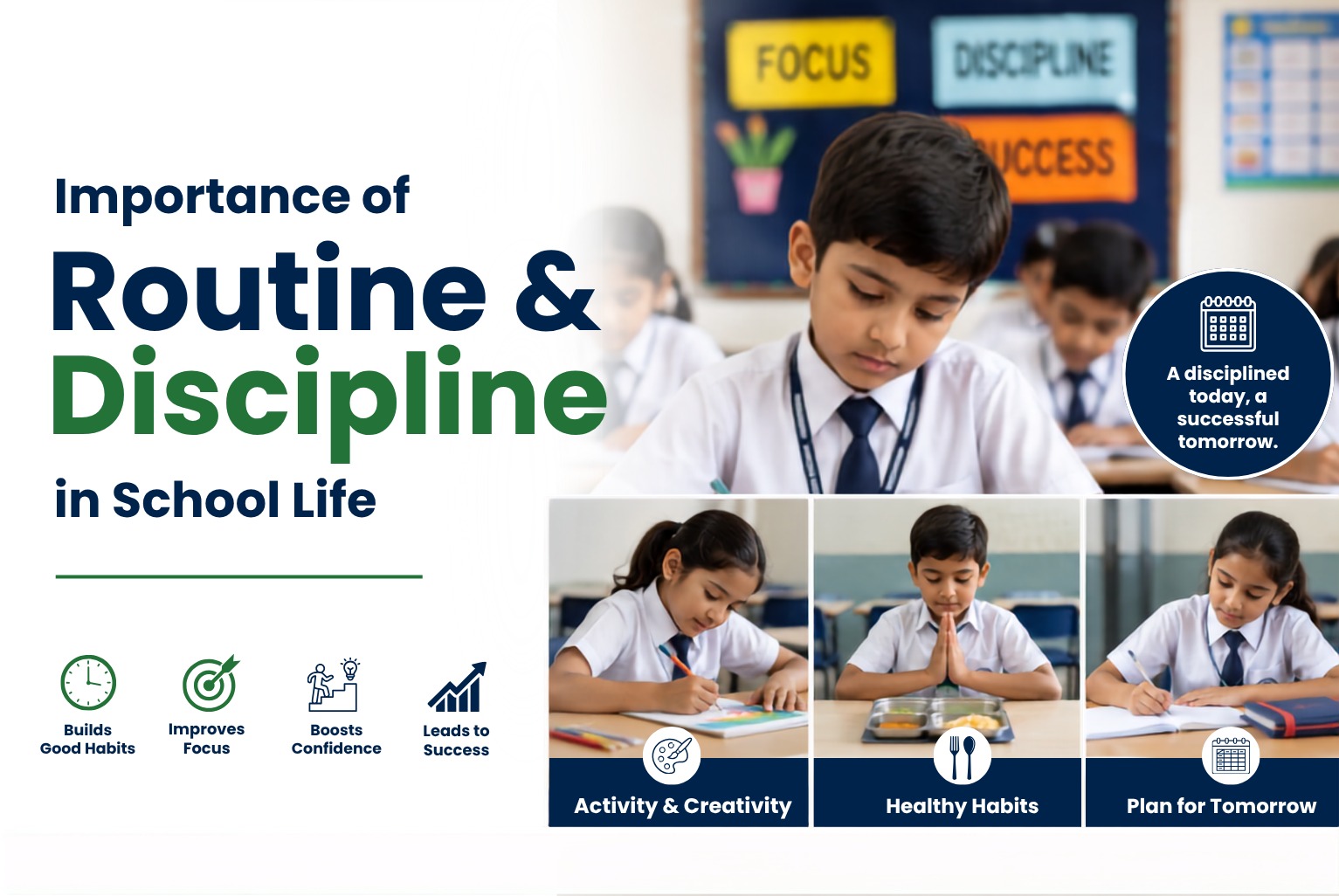
Routine and discipline are the paths taught during childhood. While intelligence, talent, and academic abilities certainly contribute to a child’s growth, routine and discipline often form the foundation that supports long-term success. Children today are surrounded by distractions. Mobile phones, social media, video games, and endless entertainment options can easily divert their attention from studies and personal development. This is why establishing a healthy routine and cultivating discipline from an early age becomes essential. Routine and discipline are not about restricting children. Instead, they help create structure, responsibility, and habits that benefit students throughout their academic journey and beyond. Why Routine Matters in a Student’s Life? A routine provides structure and predictability. When children know what is expected of them and when they need to complete certain tasks, they are more likely to stay organised and focused. A well-planned daily routine helps students: Children who follow a routine often find it easier to complete assignments, prepare for examinations, and participate in activities without feeling overwhelmed. Routines are not built within a day; they take time. Hence, introduce small habits to build them gradually. Discipline: A Life Skill Beyond Academics Discipline is often misunderstood as strict rules or punishment. In reality, discipline is about self-control, responsibility, and making the right choices consistently. A disciplined student learns to: These qualities not only improve academic performance but also help children succeed in their personal and professional lives later on. How Routine Improves Academic Performance One of the biggest benefits of maintaining a routine is improved academic performance. Students who have dedicated study hours are more likely to: Consistent study schedules help children understand concepts gradually instead of relying on rushed preparation before examinations. This is particularly beneficial in ICSE schools, where conceptual understanding and application-based learning play a significant role. Building Better Time Management Skills Time management is a skill that every student needs. Children who learn to manage their time effectively can balance: Without a routine, students often procrastinate and struggle to complete tasks on time. A structured schedule teaches them how to prioritise responsibilities and use their time wisely. These habits continue to benefit students throughout higher education and future careers. Routine Reduces Stress and Anxiety Many students experience stress because they feel overwhelmed by unfinished assignments, upcoming examinations, and multiple responsibilities. Having a proper routine means breaking larger tasks into small ones. This reduces pressure and creates a sense of control. When children know they have enough time to study, revise, play, and relax, they feel more confident and less anxious about their responsibilities. Discipline Helps Students Handle Challenges Every student faces challenges at some point. Whether it is a difficult subject, a poor test result, or a new responsibility, discipline helps children remain focused and resilient. Instead of giving up, disciplined students are more likely to: Building a mindset in the long term is crucial. The Role of Parents in Building Routine and Discipline At Friends’ Academy, we recently conducted an orientation programme for parents. We conducted this orientation programme to ensure parents are well aware of the challenges, syllabus, and many other aspects of their child’s academic journey. Another reason behind introducing this programme is that it allows parents to understand how to effectively plan their child’s schedule. Parents play an important role in helping children develop healthy habits, and this can be done only if they are aware of the habits they should encourage, such as: Children often learn more from what they observe than from what they are told. How Does Friends’ Academy Encourage Routine and Discipline? Being an ICSE School in Mulund, we play a significant role in developing discipline and responsibility among students. Regular schedules, classroom expectations, assignments, activities, and participation opportunities teach children the importance of consistency and accountability. A good school focuses on: These experiences help students develop habits that remain valuable throughout their lives. Routine and discipline are among the most valuable gifts we can give children. They create a strong foundation for academic success, emotional well-being, personal development, and future achievements. While marks and examinations are important, the habits students develop through routine and discipline often have a much greater impact on their long-term success. Want to know more about the other things that make Friends’ Academy one of the trusted schools in Mulund? Contact us or visit our campus to learn more. Frequently Asked Questions How does routine help children perform better in school? A consistent routine helps children know what to expect each day, manage their time and stay focused on important tasks. Regular sleep, study, meals and play also help children build habits that support better concentration and learning. How can parents create a good daily routine for school-going children? Parents can create a routine by setting consistent timings for waking up, meals, schoolwork, play, screen time and bedtime. Keeping the routine simple and allowing some flexibility can help children follow it comfortably and independently. How can I improve my child’s discipline and study habits? Start with small, consistent expectations such as completing homework on time, keeping school materials organised and following a regular study schedule. Encouraging effort, setting achievable goals and giving children responsibility for their tasks can gradually build discipline and better study habits. How does a school help children develop discipline and responsibility? Schools help children develop discipline through regular schedules, classroom routines, rules and age-appropriate responsibilities. Activities such as group projects, assignments, leadership opportunities and participation in school events also encourage students to manage tasks, work with others and take ownership of their actions.
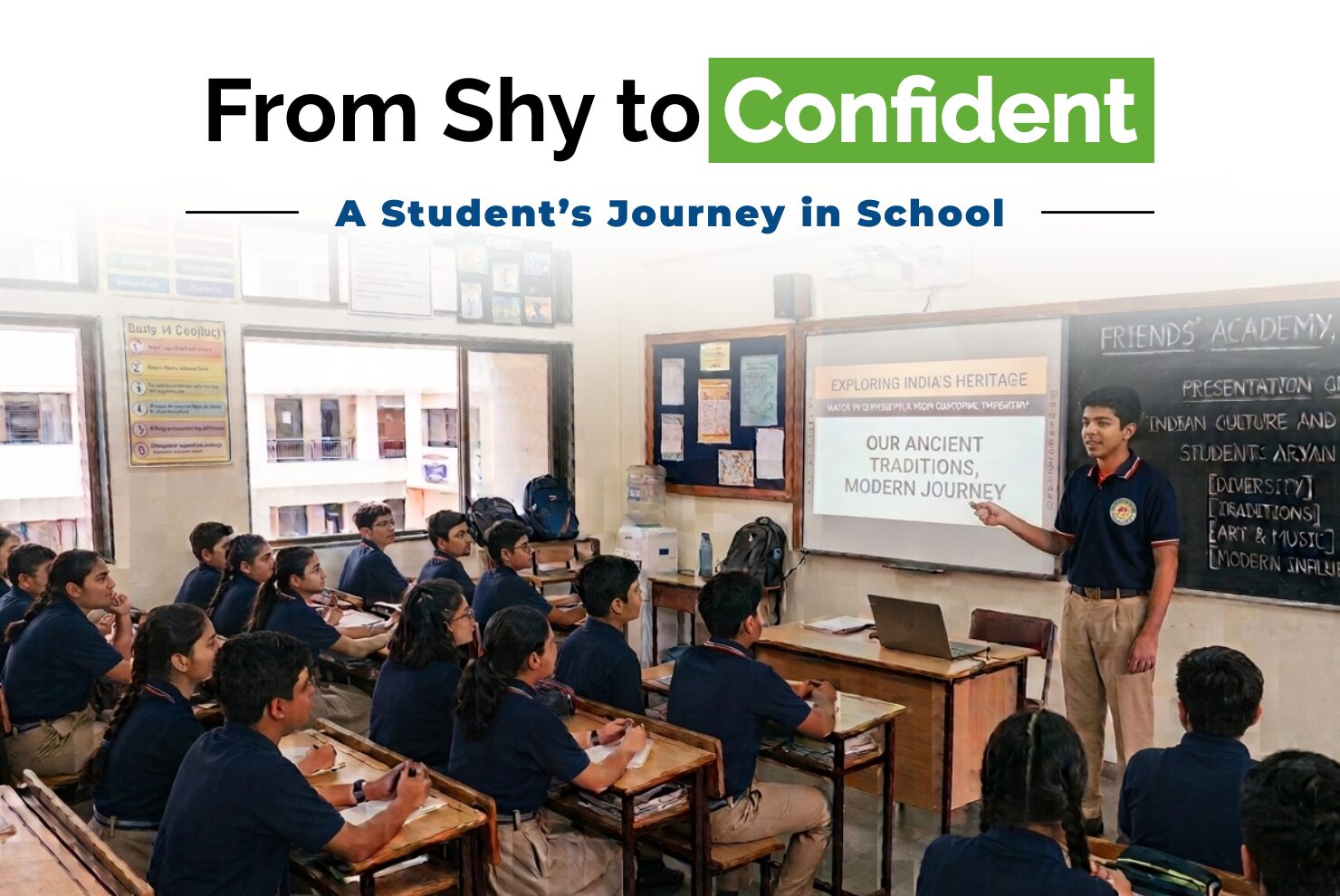
Every child enters school with a unique personality. While some students naturally participate in conversations, answer questions confidently, and make friends easily, others may take time to open up. Being shy is not a weakness; it is simply a part of a child’s personality. However, confidence is a skill that can be developed with the right environment, encouragement, and opportunities. For many parents, one common concern is watching their child hesitate to speak, avoid participation in activities, or struggle to express themselves. The good news is that schools play a significant role in helping students gradually transform from shy learners into confident individuals. Understanding Shyness in Children Shyness is common among children, especially when they enter a new environment. A shy child may: While these behaviours are natural, it is important to ensure that shyness does not limit a child’s growth, learning, or opportunities. Confidence develops when children are encouraged to step outside their comfort zones at their own pace. The First Step: Creating a Safe Learning Environment A child can only become confident when they feel safe, accepted, and valued. At Friends’ Academy, we focus on supportive learning environments that help students feel comfortable expressing their thoughts without fear of judgement. Teachers play an important role in encouraging participation, appreciating efforts, and creating opportunities for every child to contribute. When students know that mistakes are a part of learning, they become more willing to speak up and try new things. This is why modern education focuses not only on academics but also on emotional well-being and personality development. At our school in Mulund, we have different programmes that allow teachers and parents to communicate with each other and get to know the child well. Classroom Participation Builds Confidence Confidence often begins with small moments. A student who once hesitated to answer a question may eventually volunteer responses. A child who was nervous about reading aloud may become comfortable presenting in front of the class. Regular classroom participation helps students: Teachers who encourage interaction and discussions help students become active learners rather than passive listeners. The Power of Extracurricular Activities One of the most effective ways to build confidence is through extracurricular activities. Activities such as: provide students with opportunities to explore their strengths and showcase their talents. Often, a child who appears quiet in the classroom discovers confidence on a stage, sports field, or during a creative activity. These experiences teach students that confidence grows through participation, not perfection. Learning Through Teamwork Group activities help children interact with different personalities and develop social confidence. When students work together on projects, competitions, or classroom activities, they learn: Teamwork helps shy children gradually become more comfortable sharing ideas and contributing in group settings. Over time, these experiences make social interactions easier and more natural. Celebrating Small Achievements Confidence is built one achievement at a time. For some students, speaking one sentence during assembly may be a major achievement. For others, participating in a competition or leading a group discussion may be a significant milestone. Recognising and celebrating these small victories helps students: The goal is not to compare students with others but to help them grow from where they started. Confidence Beyond Academics While academic performance is important, confidence impacts every area of a child’s life. Confident students are more likely to: These skills continue to benefit them throughout higher education, careers, and personal life. This is why confidence-building has become an essential part of modern education. How Schools Shape Confident Individuals? Schools that focus on holistic development understand that education goes beyond textbooks. Opportunities such as: allow students to discover their strengths and gradually overcome hesitation. Every activity becomes a stepping stone towards greater confidence. Friends’ Academy: Nurturing Confidence Alongside Learning At Friends’ Academy, we believe that every child has unique potential waiting to be discovered. Through interactive learning, extracurricular activities, public speaking opportunities, performing arts, sports, and student engagement programmes, we encourage children to express themselves confidently and develop skills beyond academics. Our focus is not only on academic excellence but also on helping students become confident, responsible, and future-ready individuals. The journey from shy to confident does not happen overnight. It is built through encouragement, participation, positive experiences, and consistent support from parents and teachers. Every child deserves an environment where they feel valued, heard, and empowered to grow. With the right guidance and opportunities, even the quietest student can develop the confidence to speak up, participate, lead, and succeed. Because confidence is not about being the loudest person in the room—it is about believing in yourself, your abilities, and your potential to achieve great things.
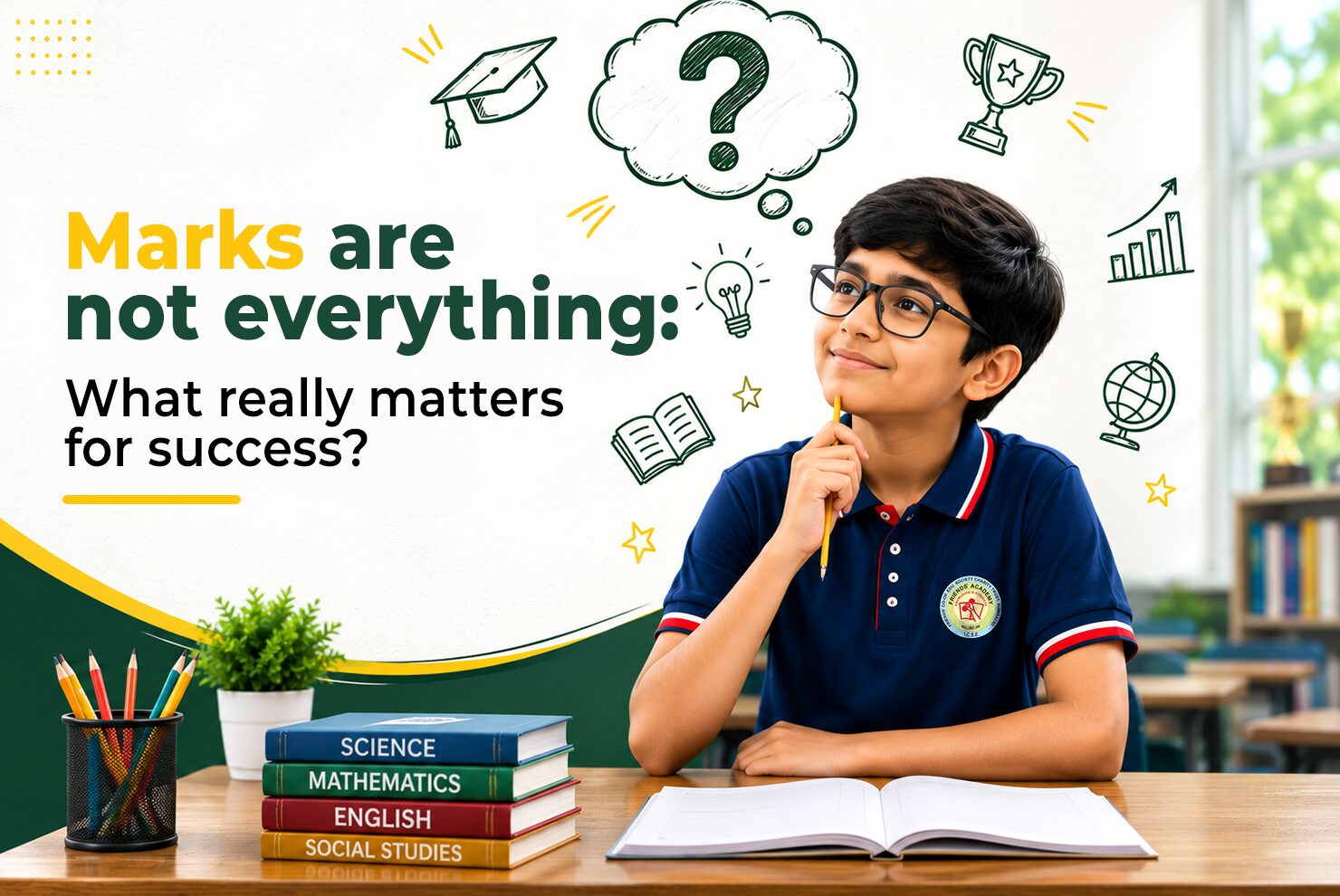
For years, marks have been considered one of the biggest measures of success in a child’s academic journey. Report cards, rankings, percentages, and grades often become the centre of discussions at home and school. While academics are important, they are only one part of a child’s overall growth. Many students who score average marks go on to become successful entrepreneurs, artists, leaders, innovators, athletes, and professionals. On the other hand, many high scorers struggle with confidence, communication, emotional management, or practical skills later in life. Do Marks Really Matter? Yes, marks do matter because they reflect a child’s academic understanding and effort. However, they are not the only measure of success. Skills like confidence, communication, creativity, emotional intelligence, and problem-solving are equally important in helping children succeed in school and later in life. We at Friends’ Academy believe the same, and hence focus on a child’s overall growth, personality, confidence, emotional intelligence, creativity, and ability to handle real-life situations, as they play an equally important role in shaping their future. As parents and educators, it is important to understand what truly contributes to long-term success and how children can be guided beyond academic pressure. Why Marks Alone Cannot Define a Child? Every child is different. Some children excel in academics, while others perform exceptionally well in creativity, sports, leadership, technology, performing arts, communication, or problem-solving. When success is measured only through marks, children may begin to fear failure, lose confidence, feel stressed about learning, and study only for scores instead of understanding concepts. Education should not only focus on memorising answers. It should prepare children for life, decision-making, communication, teamwork, and future challenges. A report card should not only show academic performance but also measure creativity, kindness, leadership, curiosity, discipline, confidence, and emotional strength. These qualities are equally important for future success. Why Is Confidence More Important Than Perfection? A confident child is more likely to participate in activities, ask questions, express opinions, explore opportunities, and overcome failures positively. Children who constantly fear marks often hesitate to take risks or try new things. They may become anxious about making mistakes. Confidence allows children to believe in themselves even when results are not perfect. This is why many schools today focus on personality development, public speaking, performing arts, robotics, and extracurricular activities alongside academics. At the end of the day, children who believe in themselves are more prepared to face real-world situations confidently. Why Are Communication Skills Important for Children? Strong communication skills are essential in every career and profession today. A child who can express ideas clearly, speak confidently, and interact effectively often performs better in interviews, presentations, leadership roles, and social situations. However, communication skills cannot be developed through marks alone. Communication grows through activities such as debates, theatre, group discussions, storytelling, presentations, and everyday classroom interactions. Emotional Intelligence Is Equally Important Success is not only about intelligence. It is also about how children manage emotions, stress, pressure, failures, and relationships. Children face academic competition, social pressure, screen distractions, comparison, and fear of failure. Children also need to learn how to stay calm under pressure, understand their emotions, build healthy relationships and handle setbacks positively. Parents can support this by having open conversations and offering emotional encouragement. Creativity and Problem-Solving Matter Today’s world values children who can think creatively and solve problems independently. Modern careers and industries value innovation, practical thinking, leadership, adaptability, and critical thinking. Children need to develop these skills when they are encouraged to participate in activities, explore hobbies, ask questions, experiment, and learn practical things. Application-based learning helps children understand concepts instead of studying them only for examinations. This is one of the reasons why most ICSE schools focus on conceptual understanding and practical exposure. Discipline and Consistency Build Long-Term Success Success is not built overnight through one examination result. It is built through consistency, discipline, patience, effort, and continuous learning. Children should be taught that improvement matters, mistakes are normal, and growth takes time. Parents should appreciate efforts, hard work, and progress rather than focusing only on final scores. A child who learns discipline and consistency becomes prepared for future responsibilities and career growth. Participation in Activities Helps Personality Development Extracurricular activities play an important role in building confidence, leadership, teamwork, communication, and social skills. Sports, dance, robotics, music, public speaking, and cultural activities make it easy for children to discover their strengths beyond academics. These activities reduce stress and improve concentration levels, making students more expressive, confident, and emotionally balanced. These experiences help children discover their strengths and interests beyond academics. The Role of Parents in Reducing Academic Pressure Many children experience stress because they feel pressured to constantly score high marks. While expectations are natural, excessive pressure can negatively affect confidence, concentration, motivation, and mental well-being. Parents can reduce academic pressure by appreciating efforts, encouraging learning instead of memorising, avoiding comparisons, celebrating small improvements, and understanding their interests and strengths. Children perform better when they are supported rather than judged. What Schools Should Focus On? A good school focuses not only on academics but also on overall child development. At Friends’ Academy, we encourage students to participate in interactive learning, extracurricular activities, personality development, communication-building, and practical learning, helping them grow into confident and future-ready individuals. As one of the leading ICSE schools in Mulund West, Friends’ Academy believes that education goes beyond textbooks and examinations. Along with academics, students are encouraged to participate in activities that build self-belief, creativity, communication skills, leadership qualities, and overall personality development. The focus is on helping every child discover their strengths, develop practical skills, and grow into capable individuals prepared for life beyond classrooms. Marks are important, but they are only one part of a child’s journey. True success is built through interpersonal skills, communication, emotional intelligence, discipline, creativity, and the ability to face challenges positively. Every child has unique strengths and talents that cannot always be measured through examination scores. As parents and educators, the goal should not only be to help children

Sixty years is more than just a milestone, it is a legacy built on trust, dedication, and the belief that education has the power to transform lives. As Friends’ Academy proudly celebrates 60 years in education, we look back not just at the years gone by, but at the countless lives shaped, dreams nurtured, and futures built within our classrooms. Since its inception, Friends’ Academy has remained committed to one purpose- helping every child become the best version of themselves. While the world has changed dramatically over the past six decades, our commitment to quality education, strong values, and holistic development has remained constant. Over the years, we have gained much more than experience. We have earned the trust of generations of parents who continue to choose Friends’ Academy for their children’s education. Many of our alumni now return as parents, entrusting us with the next generation, a reflection of the confidence and relationships we have built over the years. We have witnessed thousands of students walk through our gates with curiosity and leave with confidence. Their achievements across academics, sports, arts, leadership, and professional careers remind us that education extends far beyond examination results. As one of the trusted schools in Mulund, Friends’ Academy has continuously evolved with changing educational practices. From embracing application-based learning and experiential education to encouraging performing arts, sports, robotics, financial literacy, and personality development, we have ensured that every child receives an education that prepares them not only for examinations but for life. Perhaps our greatest achievement is the culture we have created. A culture where students feel encouraged to ask questions, teachers inspire rather than instruct, and learning built on curiosity, discipline, respect, and compassion. Every classroom, activity, and interaction reflects the values that have guided Friends’ Academy for six decades. Our journey has also been shaped by dedicated educators, supportive parents, passionate staff, and every student who has contributed to the story of Friends’ Academy. Their trust, commitment, and belief have made these 60 years truly meaningful. As we celebrate this remarkable milestone, we do so with gratitude and renewed purpose. While we proudly honour our past, we remain focused on preparing students for the future with confidence, character, creativity, and lifelong learning. Sixty years have given us countless memories, enduring relationships, and invaluable lessons. The journey continues and so does our commitment to shaping young minds for generations to come.
Every parent wants to see their child focused, attentive, and interested in learning. However, with screens, distractions, social media, and academic pressure, maintaining concentration has become one of the biggest challenges for students. Whether your child studies in primary school or higher grades, concentration plays a major role in academic success, confidence, and overall development. The good news is that concentration is not something children are simply born with. It is a skill that can be developed gradually with the right environment, habits, guidance, and support from both parents and schools. If you often wonder, “How can I improve my child’s concentration in studies?” Here are some practical and effective ways that truly help. Create a Proper Study Environment One of the biggest reasons children lose focus is because their study environment is full of distractions. Loud television sounds, mobile phones, cluttered desks, or continuous interruptions can make it difficult for children to stay attentive. A calm and organised study space helps children concentrate better and complete tasks more efficiently. What can parents do? A distraction-free environment automatically improves focus and productivity. Understand Your Child’s Learning Style Every child learns differently. Some children understand concepts visually, while others learn better through listening, activities, or practical demonstrations. Instead of forcing one learning method, parents should identify how their child learns best. This is one of the reasons most ICSE schools focus on application-based learning, as it helps children stay engaged and interested during lessons. Reduce Screen Time Smartly Excessive screen exposure is currently a concentration problem experienced by students. Constant scrolling, gaming, short videos, and notifications reduce attention over a period of time. This doesn’t mean children should avoid technology, but there should be a balance. Here is what you can do instead of completely shutting it down for your child: Children who spend more time interacting with real-world activities often show better focus and memory retention. Encourage Breaks Instead of Continuous Studying Long study hours are not beneficial; instead, they hamper performance. Start by dividing study time into smaller sessions. This allows the brain to take short breaks, feel refreshed, and absorb information effectively. If you want to follow a good approach, studying for 30–40 minutes and then taking a break of 5–10 minutes helps refresh the mind. Short breaks help reduce mental fatigue and improve concentration levels significantly. This is one of the best and most trusted ways to manage studies and improve concentration. Improving Sleeping Habits Lack of sleep directly affects memory, attention span, and academic performance. Children who sleep late often struggle to concentrate during classes and homework sessions. Hence, it is necessary to maintain healthy sleeping habits that include: A well-rested child naturally learns better and stays attentive longer. Focus on Nutrition and Physical Activity Concentration is important, but a lack of nutrition and physical activity reduces energy and focus. Vegetables, fruits, nuts, seeds, protein-rich food, and an appropriate intake of nutritious meals are likely to enhance your child’s focus. Including activities such as dance, sports, yoga, and outdoor games improves brain functioning and reduces stress. Physical activities also help children stay mentally active and emotionally balanced. Hence, encourage your child to participate in activities that keep them active. Many schools encourage extracurricular participation because such activities help children stay mentally active and emotionally balanced. Avoid Excessive Academic Pressure Sometimes children lose concentration because they feel overwhelmed, anxious, or afraid of failure. Constant pressure to score high marks can reduce confidence and interest in learning. Instead of focusing only on results: Positive reinforcement creates a healthier attitude towards studies. Encourage Reading Habits Reading is one of the best ways to improve concentration naturally. It strengthens focus, imagination, vocabulary, and comprehension skills. Parents can: Reading regularly improves a child’s ability to stay attentive for longer periods. Stay Connected With Teachers and School Parents and schools play an important role together in improving a child’s concentration. Teachers often observe classroom behaviour, attention span, and learning patterns that parents may not notice at home. Schools that focus on: often help students remain more involved and attentive during learning. At Friends’ Academy, an ICSE School, learning is designed to keep students engaged through interactive sessions, practical exposure, creative activities, and personalised guidance. The focus is not just on academic performance, but also on developing curiosity, confidence, discipline, and concentration among students. Improving a child’s concentration in studies is not about forcing longer study hours or strict discipline. It is about creating the right balance of learning, rest, emotional support, healthy habits, and engaging education. Every child has the ability to focus and succeed when guided with patience and understanding. Small changes in routine, environment, and parenting approach can make a significant difference in a child’s academic growth and confidence. If you are searching for the best School in Mulund that focuses on holistic development, interactive learning, and student engagement, Friends’ Academy continues to create an environment where children learn with curiosity, confidence, and concentration.
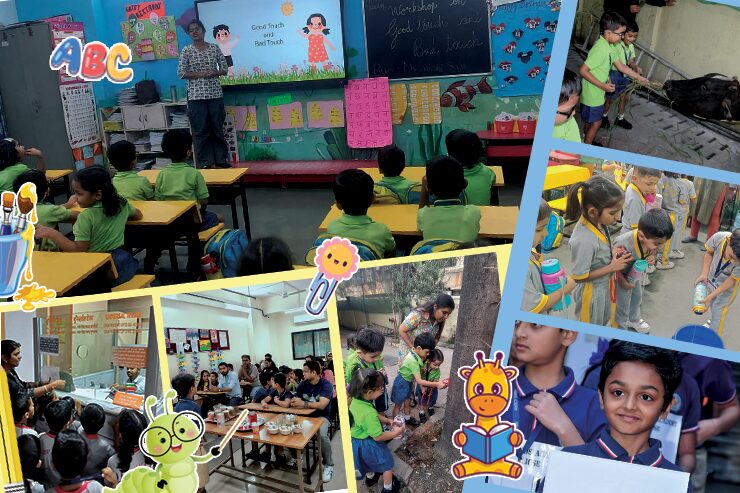
Confidence is everything; this is what we teach in school, but it is affected by different things. Right from a child’s academic performance, communication, social skills, and overall personality development, everything can be improved and enhanced if your child has confidence. Participating in different activities, expressing ideas freely, and taking up challenges help children grow into independent individuals. However, not every child openly expresses their struggles. Sometimes, low confidence appears through small behavioural changes that parents may overlook. Being an ICSE School in Mulund, most parents come to us with this problem. We offer counselling as well as on a daily basis, we encourage certain activities that boost your child’s confidence. As parents, identifying these signs early can help children receive the right support, encouragement, and guidance at the right time. Confidence is not built overnight. It develops gradually through positive experiences, emotional support, learning environments, and healthy communication. If you are wondering whether your child may be struggling with confidence, here are some common signs parents should pay attention to. Avoiding Participation in Activities One of the earliest signs of low confidence is avoiding participation. Children who struggle with self-confidence often hesitate to answer questions in class, participate in competitions, join extracurricular activities, or even interact during group discussions. This hesitation usually comes from the fear of making mistakes, fear of judgement, or feeling “not good enough.” Parents should encourage participation without forcing perfection. Appreciation for effort matters more than outcomes. Fear of Failure Children with low confidence often become overly afraid of failure. They may avoid trying new things simply because they think they will not succeed. Before suggesting anything, simply notice the statements they make. If they say, “I can’t do this,” “What if I fail?” or “Others are better than me,” help them understand that everyone goes through it. Overcoming small fears boosts their confidence, and this is an important part of learning and growth. Comparing Themselves With Others Comparison is another strong sign of reduced confidence. Children may constantly compare their marks, talents, appearance, or abilities with classmates, siblings, or friends. This slowly affects self-esteem, motivation, and emotional well-being. Parents should avoid comparing children with others and instead focus on their individual strengths and improvements. Lack of Eye Contact and Communication Children who struggle with confidence often avoid eye contact, speak softly, hesitate while communicating, or struggle to express their thoughts openly. This is common during childhood, but it can persist and build over time. The fear of being judged, feeling their opinion is not valuable, or feeling anxious in social situations should be addressed and supported. Children should be nurtured in a manner where they feel heard and respected, as this helps improve communication confidence gradually. Giving Up Easily Confident children usually try again after setbacks, while children with low confidence often give up quickly when things become difficult. They may stop attempting homework, avoid difficult subjects, quit activities midway, or lose motivation easily. Parents should encourage patience, and consistent practice rather than expecting instant success. Overdependence on Parents Seeking guidance is normal, but constantly depending on parents for every small decision can indicate low self-confidence. Children struggling with confidence may repeatedly seek approval, avoid making decisions independently, or fear taking responsibility. Allowing children to make age-appropriate choices helps build confidence and decision-making skills over time. This also helps children become more independent and rely less on others while carrying out their activities. Negative Self-Talk Confidence is usually affected by negative self-talk. Children frequently say: Such statements should never be ignored. Positive reinforcement, emotional support, and encouragement play a crucial role in helping children develop a healthier self-image. Also, ensure that you do not speak negatively in front of your child to avoid such instances. Sudden Drop in Academic Interest A child struggling with confidence may slowly lose interest in studies, classroom participation, or school activities. This usually happens when children begin doubting their own abilities. The reasons may include: Schools that focus on interactive learning, activity-based education, counselling, and student engagement often help children feel more confident and involved in learning. How Parents Can Help Build Confidence? Confidence grows when children feel supported, valued, and encouraged. Small efforts from parents can make a big difference in a child’s emotional and academic growth. Here are a few things that parents should do: Confidence is not about being perfect. It is about helping children believe in their abilities and giving them the courage to keep trying. Schools play a major role in shaping a child’s confidence. An encouraging learning environment, supportive teachers, extracurricular activities, public speaking opportunities, robotics, performing arts, sports, and student engagement activities help children develop self-belief naturally. At Friends’ Academy, an ICSE School in Mulund, students are encouraged to learn beyond academics through interactive learning, creative activities, communication-building exercises, and personality development opportunities. The focus is not only on academic excellence but also on helping every child become confident, expressive, and future-ready.
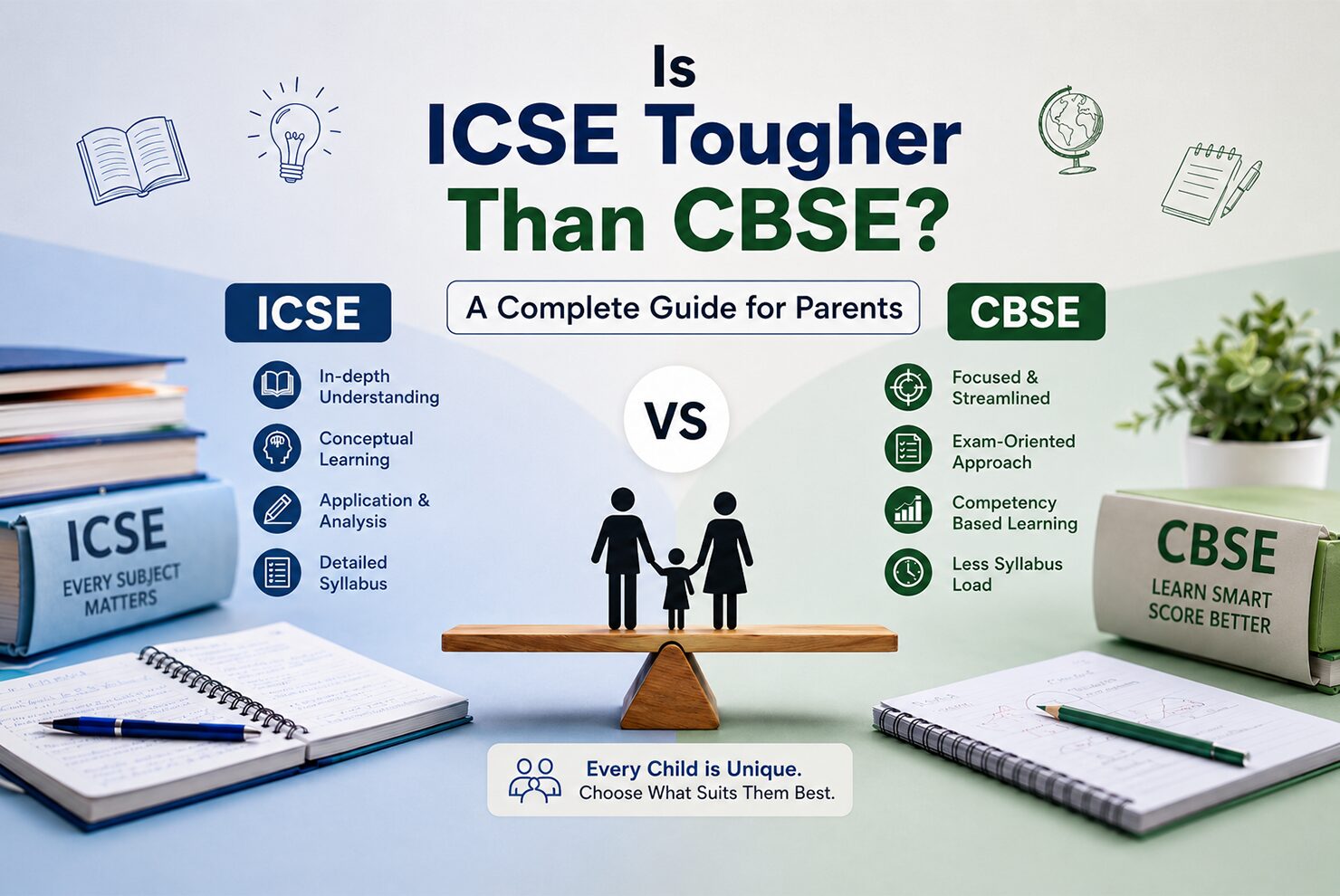
Yes, ICSE is considered tougher than the CBSE board. When it comes to choosing the right education board, parents often ask – Is ICSE better than CBSE? The answer depends on multiple factors, especially your child’s learning style and future goals. Both boards have their own strengths. Also, “tougher” does not mean better or worse. If you are looking for the best school in Mulund or planning for CBSE or ICSE admission in 2027–28, here is a complete comparison to help you make the right decision. ICSE vs CBSE: Quick Comparison for Parents Parameter CBSE Board ICSE Board Full Form Central Board of Secondary Education Indian Certificate of Secondary Education Curriculum Focus Concept-based, concise, exam-oriented Detailed, application-based, in-depth learning Syllabus Relatively concise and standardized Broad, detailed, and comprehensive Subjects Limited but well-structured choices Wider range including arts, languages, and creative subjects Language Emphasis English + Hindi (flexible) Strong emphasis on English Learning Approach More theoretical, competitive exam-focused Practical, project-based, analytical approach Competitive Exams Better aligned with JEE, NEET, etc. Requires extra preparation for competitive exams Assessment Pattern Continuous evaluation + board exams Internal assessments + strong weightage on board exams Difficulty Level Moderate Considered more challenging Global Recognition Widely recognized in India and abroad Strong global acceptance, especially for English Best For Students aiming for competitive exams Students focusing on overall development and language skills Detailed Comparison Between CBSE and ICSE 1. CBSE vs ICSE: Board Overview CBSE CBSE (Central Board of Secondary Education) is one of the most popular boards in India and is administered by the Union Government. It conducts examinations at secondary and senior secondary levels. After Class 10, CBSE offers a wide range of subjects in Science, Commerce, and Humanities, along with English and additional languages. CBSE schools are often preferred by parents whose children are preparing for national-level competitive exams. ICSE The Council for the Indian School Certificate Examinations (CISCE) is a private national-level board offering education in India. Schools affiliated with ICSE conduct the Indian Certificate of Secondary Education (ICSE) examination for Grade 10. Many parents looking for an ICSE school in Mulund prefer this board for its strong focus on English, practical knowledge, and overall development. 2. Difference Between CBSE and ICSE Syllabus CBSE The major difference lies in the syllabus. CBSE follows a structured and concise curriculum designed for clarity and efficiency. It is highly recommended for students preparing for competitive exams like IIT-JEE and NEET, as it focuses more on Science and Mathematics. The syllabus is precise, easy to understand, and aligned with future academic and career goals. ICSE The syllabus of ICSE schools is detailed and comprehensive. The curriculum focuses on practical learning, application-based knowledge, and strong conceptual understanding. Due to its structured depth, ICSE prepares students not just for exams but for real-life skills, making learning more meaningful. 3. Medium of Instruction English is the primary medium of instruction in both ICSE and CBSE boards. However, CBSE also uses Hindi as a medium of communication in many schools. ICSE schools maintain strong English proficiency, which helps students perform well in international exams like IELTS and adapt easily to global education systems. 4. Competitive Edge For national-level competitive exams like JEE and NEET, CBSE has a slight advantage due to syllabus alignment. However, ICSE students benefit from an in-depth curriculum and practical exposure, making their academic foundation stronger. This is one of the reasons why ICSE is often considered tougher than CBSE. 5. CBSE vs ICSE: Acceptability and Transfer Flexibility CBSE schools are widely accepted across India, making it easier for students to transfer between cities or schools without disrupting their education. On the other hand, choosing an ICSE school ensures strong foundational learning and global readiness. While transferring may require finding another ICSE-affiliated school, ICSE students are well-prepared for international opportunities and higher education abroad. 6. Assessment & Grading System CBSE Assessment ICSE Assessment 7. Recognition and Global Acceptance Both ICSE and CBSE boards are highly recognised in India and abroad. Which is Better: ICSE or CBSE for Your Child? Choosing between a CBSE and ICSE school should always depend on your child’s goals, interests, and learning style. If you are looking for a curriculum that builds strong fundamentals, practical knowledge, and global readiness, ICSE is often considered a better fit. While it may be tougher, it prepares students not just for exams but for life and long-term career growth. Why Choose Friends’ Academy – ICSE School in Mulund At Friends’ Academy, School in Mulund, we follow a well-structured learning methodology that helps students prepare for both academics and life beyond the classroom. We do not just focus on textbooks, we focus on building confidence, clarity, and real-world skills. The recognition we have received over the years reflects our commitment to quality education. If you are searching for the best ICSE school in Mulund, Friends’ Academy offers the right environment for your child’s growth and success. Parents should never hesitate when it comes to education. If you still have questions like “Should I choose ICSE or CBSE for my child in 2027–28?”, we invite you to visit our school and seek the right guidance about which school is better for your child’s future.